SeaTac, WA · King County
Basement Water Removal in SeaTac, WABasement Wall Drying & Basement Drying Services
Homeowners in SeaTac get Basement Water Removal for basement floor water damage, basement water pump out and basement moisture inspection.
Answered 24/7
Expert Basement Water Removal in SeaTac, Tukwila, Normandy Park and Des Moines
In SeaTac, a finished basement or lower level takes more work after a flood. Carpet, pad, laminate, drywall and insulation all trap water against the concrete and framing.
Homes in SeaTac and nearby Tukwila, Normandy Park and Des Moines with basements face storm seepage, sewer backups and plumbing leaks. Help with basement water removal covers pump-out, wall and floor drying and dehumidification.
Comprehensive Basement Water Removal Solutions
Basement Wall Drying
Concrete and block walls dry with directed airflow and dehumidification, which pull water out of the masonry.
Basement Drying Services
Drying plans for basements account for cool air and thick concrete, which hold moisture longer than upper floors.
Basement Floor Water Damage
Water on a basement floor soaks into carpet pad, laminate seams and the concrete itself. Floor coverings are lifted where needed so the slab can dry.
Basement Dehumidification
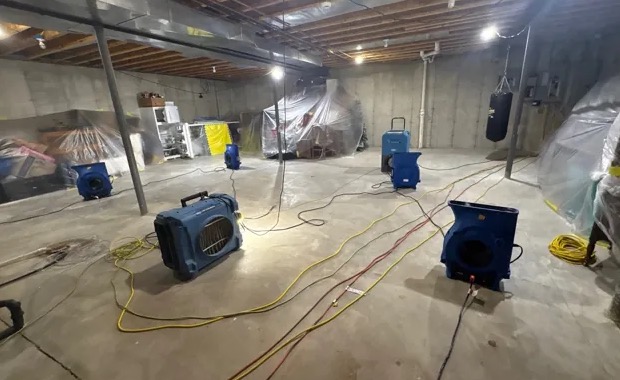
Dehumidifiers run continuously during drying, and their output is checked to track how much water is still coming out of the materials.
Basement Moisture Inspection
Moisture meters and thermal cameras check walls, floors and the slab for water that is not visible, including behind finished walls.
When to Call for Basement Water Removal in SeaTac
Warped or Buckling Flooring
Flooring that buckles, lifts or feels spongy has water trapped between it and the slab.
Soggy or Wet Carpeting
Carpet that feels damp or smells sour is holding water in the pad against the concrete.
Standing Water in Basement
Standing water anywhere on the basement floor needs to be pumped out before it soaks the walls.
Wet or Damp Basement Walls
Basement walls that look dark, feel damp or show tide lines are taking on or holding water.
How Basement Water Removal Works in SeaTac
Step 1: First Call and Initial Assessment
The source, the type of water and the depth are checked, and the water level is photographed.
Step 2: Bulk Water and Contaminant Removal
Pumps remove standing water, and carpet, pad or drywall touched by dirty water is removed.
Step 3: Drying With Monitoring
Dehumidifiers and air movers run around the clock, with readings logged every day on walls and slab.
Step 4: Post-Drying Evaluation and Documentation
Final readings and photos are compiled to show the basement is dry and what was removed.
Common Causes of Basement Water Damage in SeaTac
Plumbing Leaks or Pipe Bursts
Supply lines, drain pipes and water heaters in the basement can leak or burst onto the floor.
Heavy Rainfall and Storm Flooding
Heavy rain saturates the soil and pushes water through walls, cracks and the floor joint.
High Water Table and Hydrostatic Pressure
A high water table presses groundwater against the slab and walls, forcing it inside.
Clogged or Damaged Gutters
Clogged gutters and short downspouts dump roof water right next to the foundation.
House and Business Basement Water Removal in SeaTac
Residential Basement Water Removal
Families should keep children and pets away from basement water until power is safe and the type of water is known.
Commercial Basement Water Removal
In restaurants and shops, basement water near food or stock storage needs removal and cleaning before those areas are used again.
The Risks of DIY Basement Water Removal
Water that came up through a floor drain may be sewage. Avoid touching it, keep children and pets away and call local water damage pros for cleanup with protective gear and disinfection.
Understanding Basement Water Removal Pricing
A basement pumped out the same day in SeaTac usually needs less drywall and flooring replaced than one left wet for days.
Affected Materials
Finished walls, carpet and laminate take more removal work than bare concrete.
Water Depth and Volume
Deeper water takes more pumping time and usually means more materials got wet.
Drying Time Required
Basements dry slowly, and each extra day of equipment adds to the total.
Does Insurance Cover Basement Water Removal?
Photos, moisture readings and drying logs from local water damage pros help support an insurance claim for basement water damage in SeaTac.
The Value of Professional Basement Water Removal
24/7 Emergency Response
Help is available day or night when water is rising in the basement.
Advanced Drying Equipment
Pumps, extractors and large dehumidifiers remove water much faster than household tools.
Clear Communication
You get plain updates on what was found, what was removed and how drying is going.
Emergency Basement Flood Response in SeaTac
Basement taking on water in SeaTac? Make power safe if you can, move what you can and call (253) 785-9361. Help is available 24/7.
Call Now (253) 785-9361Basement Water Removal Serving SeaTac and Surroundings
Besides SeaTac, the pros handle basement pump-outs, wall drying and dehumidification in nearby Tukwila, Normandy Park and Des Moines.
- Basement Water Removal in Tukwila
- Basement Water Removal in Normandy Park
- Basement Water Removal in Des Moines
- Basement Water Removal in Skyway
- Basement Water Removal in Burien
- Basement Water Removal in White Center
- Basement Water Removal in Kent
- Basement Water Removal in Renton
- Emergency Damage Restoration in 98158
- Storm Damage Restoration in 98158
- Water Damage Restoration in 98158
- Water Extraction Service in 98158
- Water Leak Detection in 98158
- Water Removal Service in 98158
- Emergency Damage Restoration in 98188
- Storm Damage Restoration in 98188
Common Basement Water Removal Questions Answered
How is basement wall drying done?
Wet drywall is cut back, insulation removed and directed airflow and dehumidifiers dry the studs and masonry.
Why is basement dehumidification important after pumping?
Walls and concrete keep releasing moisture for days. Dehumidifiers remove it so the basement does not stay damp.
How does a basement moisture inspection work?
Moisture meters and thermal cameras check walls, floors and the slab, including behind finished walls and under flooring.
How is contaminated water handled in a basement?
With protective gear, containment, removal of porous materials and disinfection of hard surfaces before drying.
What equipment is used for basement water extraction?
Submersible pumps, extractors, wet vacs, air movers, large dehumidifiers and moisture meters to confirm drying.