Kent, WA · King County
Warehouse Water Damage Restoration in Kent, WAWarehouse Floor Water Removal & Warehouse Flood Water Extraction
Warehouse Water Damage Restoration in Kent provides warehouse mold remediation, warehouse floor water removal, and warehouse leak detection repair.
Answered 24/7
Local Warehouse Restoration Experts Serving Kent
Water in a warehouse threatens equipment, inventory and building safety. Drying pros start by extracting the flood water and finding the leak.
Warehouse water damage restoration is a critical service for industrial and storage facilities in Kent, where water intrusion can halt operations and damage valuable stock. The pros provide warehouse flood water extraction and structural drying to restore functionality, serving businesses here and in nearby areas like East Hill, Des Moines and Lakeland North.
Warehouse Water Damage Restoration Process for Kent Warehouses
Warehouse Floor Water Removal
Pros use specialized equipment to pull trapped moisture from concrete and sealed floors before mold or slab damage sets in.
Warehouse Flood Water Extraction
For warehouse flooding, bulk water extraction comes first. Truck-mounted systems handle the significant water present on the industrial floor.
Warehouse Equipment Drying
Pros dry forklifts, conveyors and control panels with controlled methods, which can avoid costly replacements and shorten downtime.
Warehouse Water Damage Cleanup
After drying, local pros wash floors, wipe down structural elements and control odors so the warehouse is ready to operate, with records for your claim.
Warehouse Mold Remediation
Warehouse mold remediation contains growth on walls or materials. Contaminated porous items are removed, and surfaces are cleaned.
Indicators of Warehouse Water Damage in Kent
Damp Inventory or Materials
Wet boxes, soggy pallets or damp raw materials mean water is reaching your inventory.
Water on Warehouse Floor
Standing water in aisles or around stored goods needs to be removed before it soaks into pallets and stock.
High Humidity Readings
A hygrometer that keeps showing high humidity means the building is still wet.
Warped or Buckling Floors
A curling slab or failing epoxy coating points to moisture under the floor.
How Warehouse Water Damage Restoration Works in Kent
Step 1: Flood Water Removal
The first response involves warehouse flood water extraction using truck-mounted or portable systems to clear aisles and work areas of bulk water.
Step 2: Comprehensive Moisture Mapping
Pros use sensors to map moisture levels throughout the warehouse, identifying wet spots in floors and walls to guide the warehouse drying services plan.
Step 3: Targeted Equipment Drying
Machinery and electrical panels near the water get focused drying to limit corrosion and electrical damage.
Step 4: Sanitization and Air Scrubbing
If needed, the area is sanitized, and air scrubbers remove particulates and odors, completing the warehouse water damage cleanup and restoring air quality.
Typical Sources of Warehouse Water Damage
Faulty Drain or Sewer Backup
Blocked floor drains or a municipal sewer backup can send contaminated water into the warehouse.
Foundation or Slab Leaks
Cracks in the slab or foundation walls let groundwater seep into the warehouse.
HVAC Condensate Line Failure
Clogged or disconnected drain lines from large commercial units can flood warehouse floors quickly.
Human Error and Accidents
A left-on hose, an overturned tank, or a forklift damaging a pipe can initiate flooding.
Commercial Warehouse Water Damage Restoration in Kent
Residential Water Damage Restoration
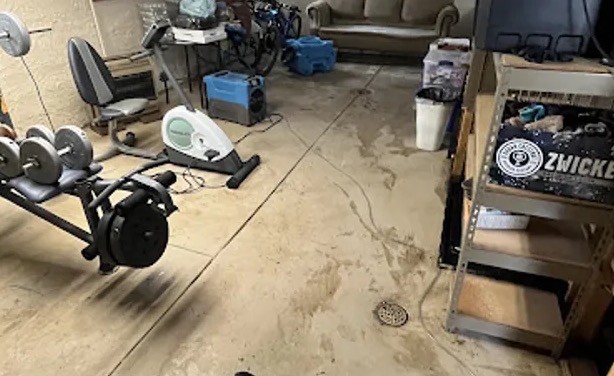
A flooded home workshop with power tools and materials requires the thorough moisture removal approach of the experts to dry the space and prevent warping or rust damage to equipment.
Warehouse Water Damage Restoration
Property managers need concrete slabs dried to avoid flooring and moisture problems later. Moisture maps and readings also support the insurance claim.
Warehouse Water Damage Restoration vs. DIY: When to Call Local Experts
Improving ventilation by opening doors and using fans can help with mild humidity. For serious warehouse moisture removal after a flood, this is insufficient and can spread contaminants; structured drying with air movers and dehumidifiers is needed.
Understanding Warehouse Water Damage Restoration Cost in Kent
Estimating warehouse water damage repair expenses involves assessing damage to racking systems, machinery, and electrical panels. This assessment happens alongside the core restoration work on the building envelope.
Warehouse Square Footage
Larger wet areas take more equipment and labor hours to extract and dry.
Inventory and Equipment Damage
Costs go up when stored goods or machinery got wet and need drying, cleaning or corrosion control.
Structural Material Type
Concrete floors and steel framing dry differently than areas with drywall or insulation, affecting the methods and time required.
Does Insurance Cover Warehouse Water Damage Restoration?
The pros provide detailed reports and invoices that document the scope of work and moisture readings. The property owner can submit these to their insurer, but final coverage decisions rest with the insurance company.
Advantages of Hiring Local Experts for Warehouse Water Damage Restoration
Structural Drying Expertise
Proper warehouse structural drying protects the building's integrity by removing moisture from concrete slabs, steel frames, and wall cavities effectively.
Industrial-Grade Equipment
Warehouse flood cleanup requires truck-mounted extractors, industrial dehumidifiers, and high-volume air movers designed for large-scale commercial spaces.
Leak Detection Repair
After extraction, warehouse leak repair experts can help identify and address the source of the water intrusion to prevent a recurrence.
Warehouse Water Damage Restoration Help Available 24/7
If there is active water intrusion in a warehouse, call (253) 785-9361 for emergency industrial water damage restoration services. Response is available any time, day or night, to begin containment and extraction.
Call Now (253) 785-9361Areas Served for Warehouse Water Damage Restoration Near Kent
Local warehouse water damage restoration is available for properties in Kent, along with nearby places like East Hill, Des Moines and Lakeland North, providing industrial-scale flood response.
- Warehouse Water Damage Restoration in East Hill
- Warehouse Water Damage Restoration in Des Moines
- Warehouse Water Damage Restoration in Lakeland North
- Warehouse Water Damage Restoration in SeaTac
- Warehouse Water Damage Restoration in Auburn
- Warehouse Water Damage Restoration in Federal Way
- Warehouse Water Damage Restoration in Tukwila
- Warehouse Water Damage Restoration in Covington
- Emergency Damage Restoration in 98030
- Storm Damage Restoration in 98030
- Water Damage Restoration in 98030
- Water Extraction Service in 98030
- Water Leak Detection in 98030
- Water Removal Service in 98030
- Emergency Damage Restoration in 98031
- Storm Damage Restoration in 98031
Warehouse Water Damage Restoration FAQs
Who decides what warehouse inventory is salvageable after flooding?
The warehouse owner or manager, often in consultation with their insurer and the pros assessing the damage, makes those final decisions.
What are the signs of hidden warehouse water damage?
Look for persistent damp odors, staining on walls or floors, warping of materials, or unexplained corrosion on metal surfaces or equipment.
What does warehouse structural drying involve?
This process uses industrial air movers and dehumidifiers to remove moisture from building materials like concrete, steel, and wall assemblies to dry standards.
What is the goal of warehouse moisture removal?
To return building materials to normal dry readings, measured with moisture meters, so they do not decay or grow mold.
When is warehouse mold remediation necessary after water damage?
If visible mold growth appears or moisture is left unresolved for over 24 48 hours, remediation procedures for containment and removal become necessary.